Optimising grain storage on a farm is not limited to proper grain ventilation or monitoring silos. It also requires absolute control of incoming and outgoing flows. While the traditional weighbridge remains the domain of agricultural cooperatives for legal metrology (member settlement), the dynamic axle weigher is now establishing itself as a cost-effective, high-performance alternative for arable farmers. Discover the various weigh-in-motion systems tailored to the demands of the agricultural sector, their operational benefits, and our practical advice for securing your shipments.
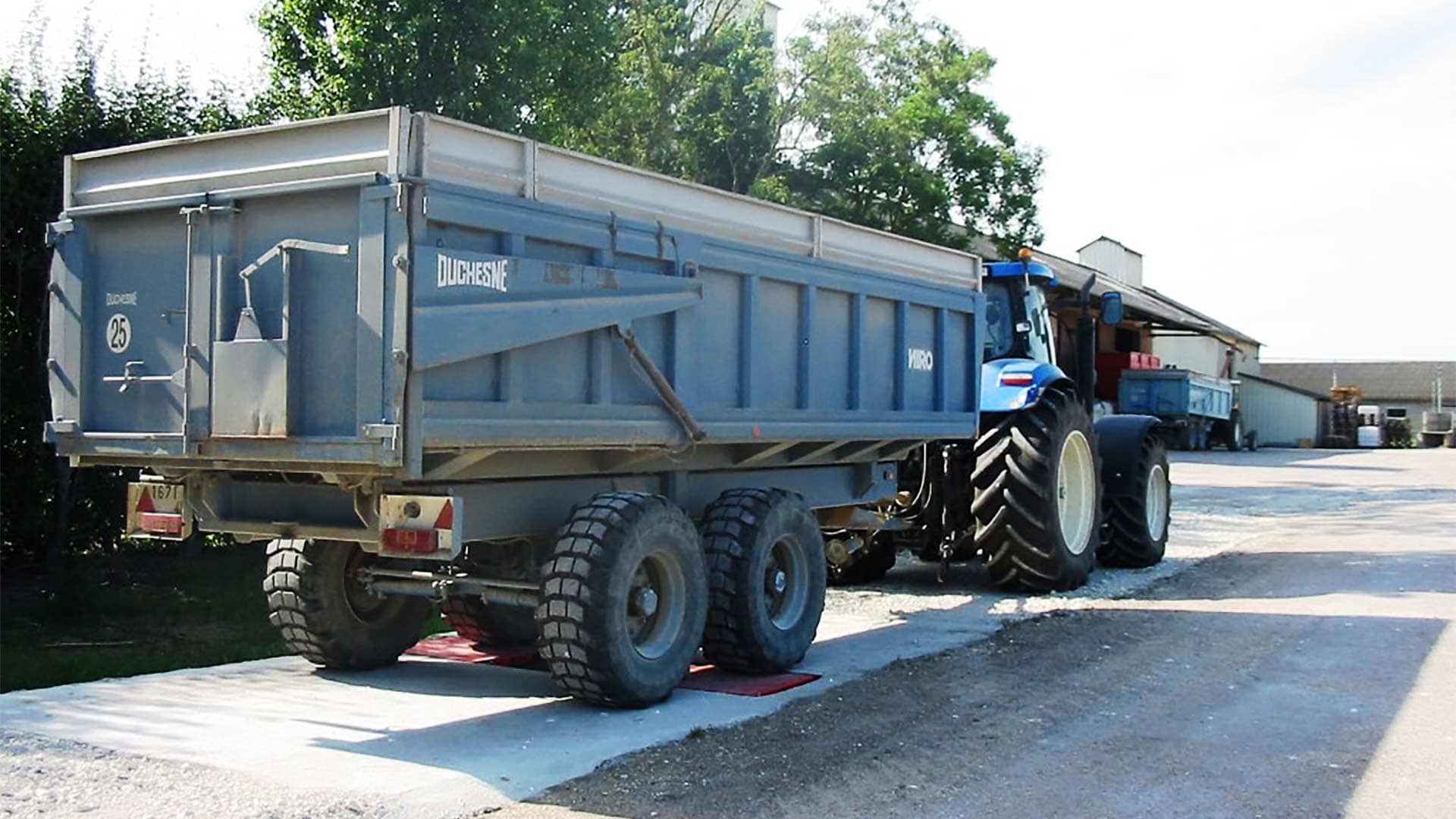
Not all weighing devices are equal, especially when it comes to withstanding the stresses of agricultural and road tyres. For grain stock management, two main configurations meet the needs of arable and mixed-farming holdings.
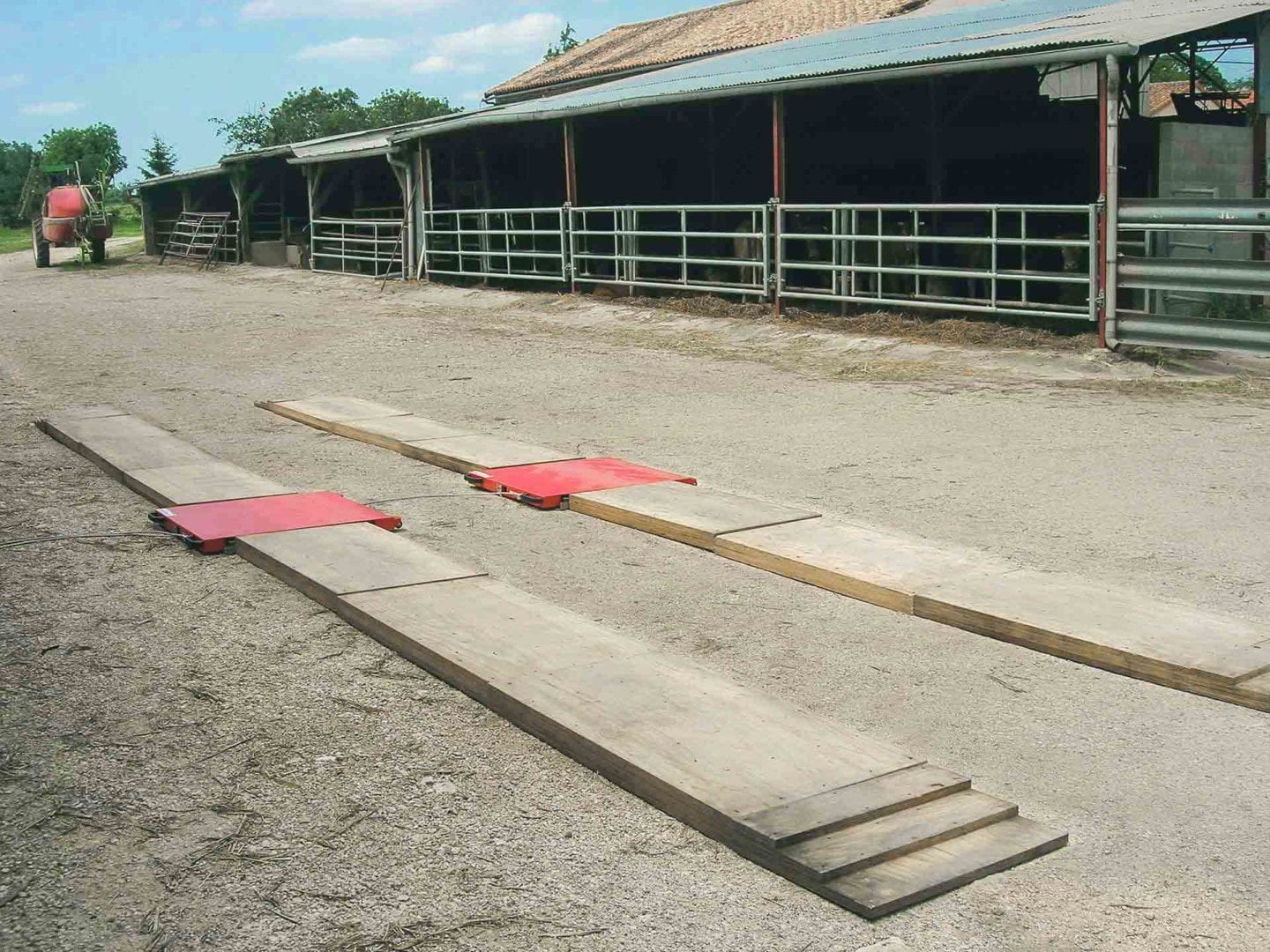
Portable dynamic axle weighers are lightweight, surface-mounted solutions that can be easily relocated. As the vehicle travels at reduced speed over the weighing pads, the weight of each axle is instantaneously recorded, processed, and displayed on an indicator terminal.

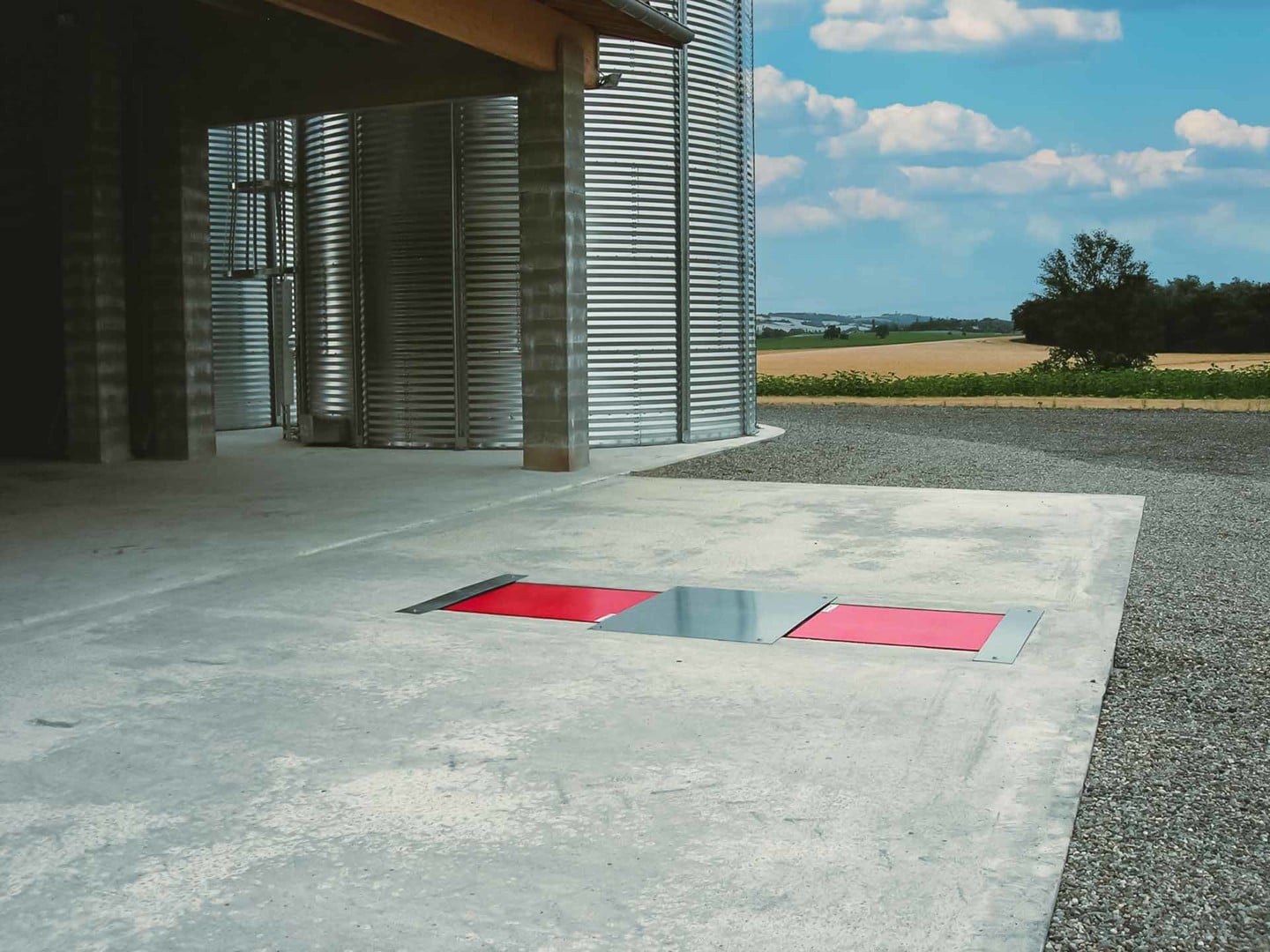
Directly integrated into a civil engineering recess, in-ground dynamic axle weighers sit flush with floor level. They deliver maximum resistance to the repeated passage of heavy vehicles.
Low-pressure tyre specification: Unlike standard road-weighing equipment, Captels solutions feature platforms sized to absorb the significant footprint deformation of wide agricultural tyres along the direction of travel. This design eliminates measurement bias.
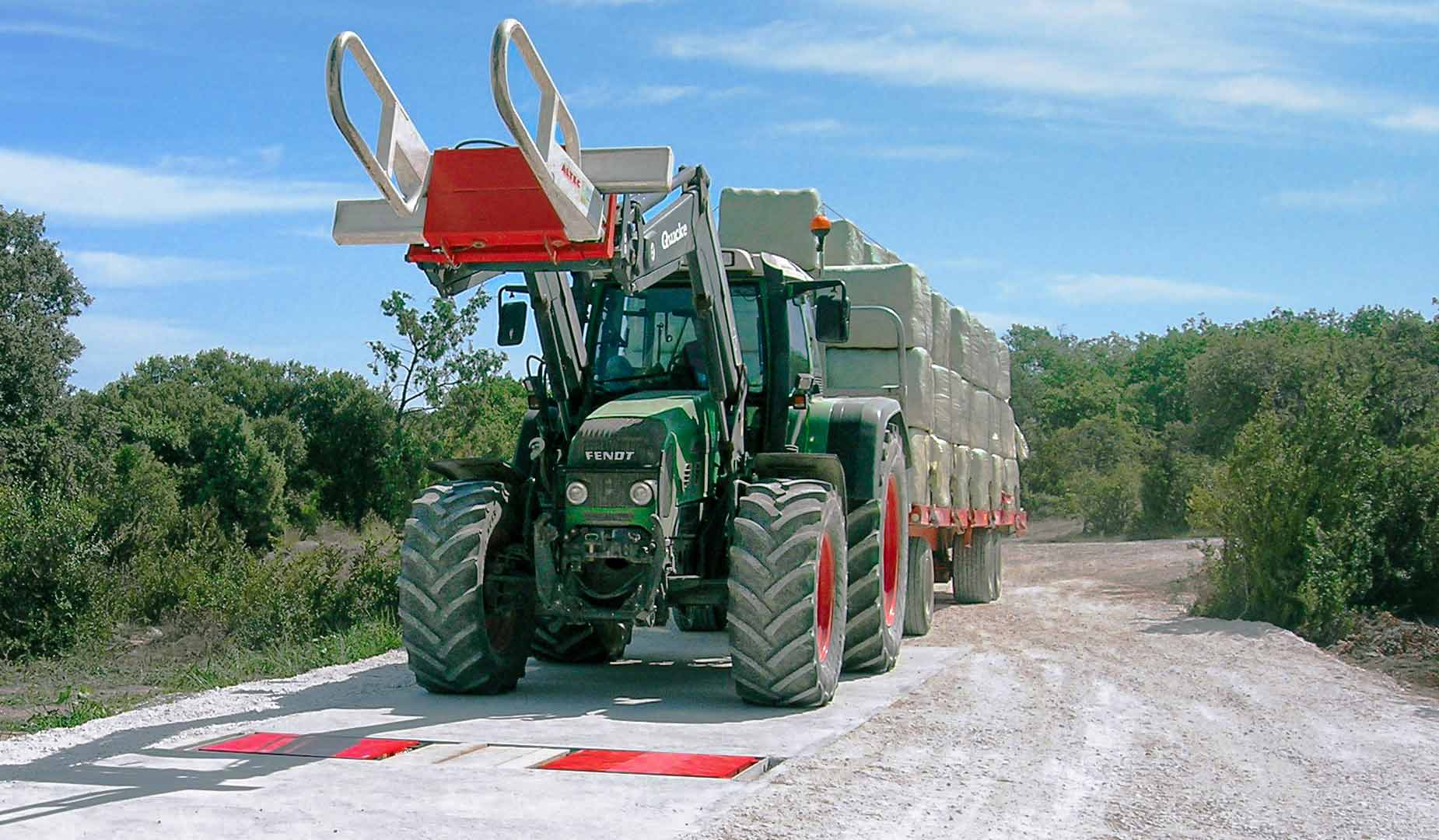
Portable or pit-mounted: Which system best fits your farmyard layout?
Investing in an on-farm weighing solution delivers immediate profitability levers that go far beyond simple weight indication.
You weigh your crops as soon as they enter the silos, giving you real-time visibility over available volumes by variety and quality. This visibility is essential to get the best possible value for your grain batches and negotiate sales contracts at the most opportune market time.
Weighing trailers upon return from the field enables you to map the productivity of your farm with precision. By cross-referencing these actual weight data with your agronomic practices (fertilisation, seeding density), you can optimise future yields and control your input costs.
This is the critical point when shipping grain. While the risk of local roadside checks is limited for an agricultural tractor-and-trailer combination, it is maximal for semi-trailers chartered to collect your grain. These heavy vehicles travel along major roads and motorways, and regularly cross borders.
As the consignor, loading a semi-trailer beyond regulatory limits (often 44 tonnes in road transport) exposes both you and the haulier to heavy penalties:
The dynamic axle weigher enables you to precisely check the total weight of the lorry before it leaves your farmyard. You can adjust the load and optimise haulier turnaround times without ever flirting with illegality.
To obtain accurate and repeatable results with a weigh-in-motion system, strict compliance with manufacturer recommendations is essential. The secret lies in eliminating load transfers between axles during passage.
In conclusion, installing a dynamic axle weigher tailored to agricultural tyres offers numerous advantages for on-farm grain stock management. Farmers can achieve complete autonomy in weighing harvests as well as managing incoming and stored materials on the holding. They are able to accurately track stored grain quantities, optimise shipments and avoid overloading, calculate and improve field yields, and enhance crop value while controlling input costs. Both portable and in-ground dynamic axle weighers are versatile, affordable alternative agricultural weighing solutions to traditional weighbridges that deliver multiple benefits. When installing a dynamic axle weigher, it is essential to select a flat area in a straight line and follow practical guidance for a successful setup. Installing a dynamic axle weigher is a profitable investment for any agricultural holding seeking to optimise its grain, straw, and forage storage and transport operations.
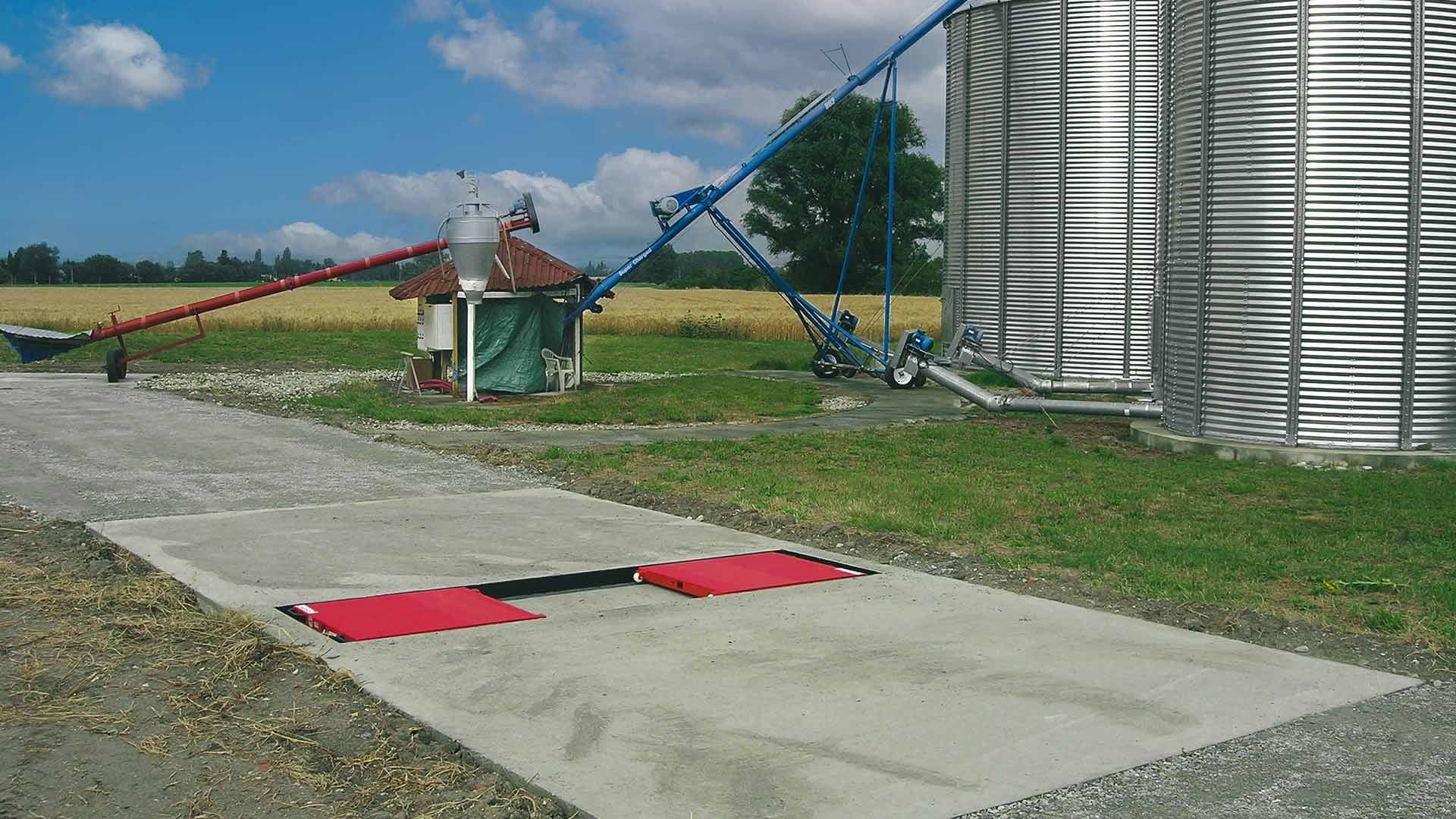
The cooperative weighbridge is an instrument subject to legal metrology (regulated use) that serves as the financial basis for paying different co-operators. The on-farm dynamic axle weigher is an internal management tool. Significantly less expensive in terms of civil engineering and infrastructure, it offers rigorous technical precision. It is the ideal solution for securing your stocks, tracking your yields, and checking the GVW of road transport lorries before departure.
Yes, absolutely. Captels dynamic systems are designed to weigh any heavy vehicle in motion, from agricultural tractors with trailers to semi-trailer road combinations (from 3 to 5 axles, such as grain trailers). The system calculates the weight axle by axle, and then totals the overall weight of the convoy with high reliability.
To achieve optimal measurement and avoid sudden mass transfers between axles, the vehicle must cross the weighing pads at a constant speed, without accelerating or braking. For a pit-mounted axle weigher, the ideal speed is between 3 and 5 km/h. For a portable surface-mounted system, it should be slower, between 1 and 3 km/h.
To guarantee the perfect stabilisation of the lorry or tractor before and after measurement, it is essential to create a flat area in a straight line. Installing a pit-mounted axle weigher requires a concrete slab with a minimum length of 3.50 metres upstream and 3.50 metres downstream of the central recess (i.e. a stabilised zone of 7 metres in total).
The dynamic processing algorithm of Captels indicators is specially designed to filter out vibrations, jolts, and vehicle suspension oscillations. Even if the grain moves slightly inside the trailer during passage, the measurement of the force applied to each axle remains reliable and stable.
Yes, this is a major technical feature of our equipment. Agricultural low-pressure tyres have a much wider ground contact surface (footprint) and undergo significant deformation during rolling. Captels solutions feature platforms specifically sized to absorb this footprint deformation along the direction of travel. This configuration eliminates any measurement bias compared to standard road equipment.
In France, the Gross Vehicle Weight (GVW) for a standard road combination is generally limited to 44 tonnes. In the event of a roadside check on major routes, any excess exposes both the driver and the consignor (the farmer) to heavy class 4 fines (up to €750 per tier of overload), immediate immobilisation of the lorry, and mandatory on-site offloading, not to mention legal liabilities in the event of an accident.
Yes, this is essential for accuracy. Without these tools, surface-mounted pads create a false level that distorts weight through load transfer. To compensate for this height, you must use approach ramps or levelling accessories. At a lower cost, timber beams or wooden shims with excellent compressive strength are perfectly suitable over a length of 3.50 m before and after the pads.
Yes. Captels dynamic axle weighers are fully configured, tested, and calibrated in the factory before dispatch. Once physical installation is complete on your farm (whether surface-mounted or pit-mounted in its concrete recess), the system is immediately operational for weighing your harvests or loads.
The agricultural environment is subject to dust, soil, and moisture (especially during harvesting or autumn operations). Captels pit-mounted axle weighers are designed with high protection ratings (IP67). Basic maintenance involves regularly checking that no soil or foreign bodies accumulate in the recess beneath the pads, and cleaning the area with a water jet or pressure washer (without spraying directly onto the connectors) to ensure the system oscillates freely.
Want to optimise your stock management and secure your grain shipments? Estimate the budget for your weighing project.

Website created by Citron Noir
